


A successful kitchen renovation is about more than upgrading cabinets and benchtops. The right tiles can transform your kitchen into a stylish, functional and easy-to-maintain space that complements your home. Whether you are planning a complete kitchen makeover or simply updating your splashback and flooring, choosing the right tiles is essential for achieving a beautiful, long-lasting result.
At Tiles Etc, we understand that selecting kitchen tiles involves balancing design, durability, maintenance and budget. From modern porcelain floor tiles to elegant ceramic splashbacks, the right choice can enhance your kitchen’s appearance while meeting the demands of everyday cooking and family life.
In this guide, we explore everything you need to know about choosing tiles for your next kitchen renovation, including the best tile materials, popular designs, maintenance tips and expert advice to help you make an informed decision.
Why Are Tiles Important for a Kitchen Renovation?
Tiles play an important role in both the appearance and functionality of a kitchen. Kitchens experience regular foot traffic, food spills, moisture, heat and frequent cleaning. Choosing suitable tiles helps protect surfaces while creating a cohesive interior design.
Here are some of the main benefits of incorporating quality tiles into your kitchen renovation:
- Durability: Suitable floor and wall tiles can withstand the demands of everyday kitchen use.
- Easy maintenance: Many ceramic and porcelain tiles are simple to clean and maintain.
- Moisture resistance: Porcelain and appropriately rated ceramic tiles are excellent options for areas exposed to splashes and spills.
- Design flexibility: Tiles are available in numerous colours, textures, patterns, sizes and finishes.
- Long-term appeal: Timeless tile designs can complement changing kitchen styles over the years.
For Australian homes, choosing tiles that suit your household, lifestyle and the specific conditions of each kitchen surface is an important part of planning a successful renovation.
1. Choose the Best Tiles for Your Kitchen Floor
Kitchen flooring must balance visual appeal with safety, durability and ease of cleaning. The best choice depends on your budget, the amount of foot traffic and the overall design of your kitchen.Porcelain tiles
Porcelain tiles are a popular choice for kitchen renovation projects because they are dense, durable and generally have low water absorption. They are available in stone-look, concrete-look, marble-look and timber-look designs, making them suitable for a wide range of interiors.
Best for: Busy family kitchens, contemporary homes and open-plan living areas.
Ceramic tiles
Ceramic tiles offer a wide variety of colours, patterns and finishes. They can be an attractive and economical option, particularly for kitchen walls and splashbacks. Some ceramic floor tiles are also suitable for kitchen flooring when their specifications and slip resistance meet the requirements of the space.
Best for: Budget-conscious renovations, decorative designs and selected flooring applications.
Natural stone-look tiles
If you love the appearance of marble, limestone or travertine, stone-look porcelain tiles can provide a similar aesthetic with generally less maintenance than natural stone.
Best for: Luxury-inspired kitchens, neutral colour palettes and timeless interiors.
Tiles Etc tip: Always check the tile’s intended application, slip rating, finish and technical specifications before selecting flooring. A polished tile may look impressive but may not be suitable for every kitchen floor.
2. Select the Right Kitchen Splashback Tiles
A kitchen splashback protects the wall behind your cooktop, sink and preparation areas while providing an opportunity to introduce colour, texture and personality.
Popular kitchen splashback tile options include:
Subway tiles
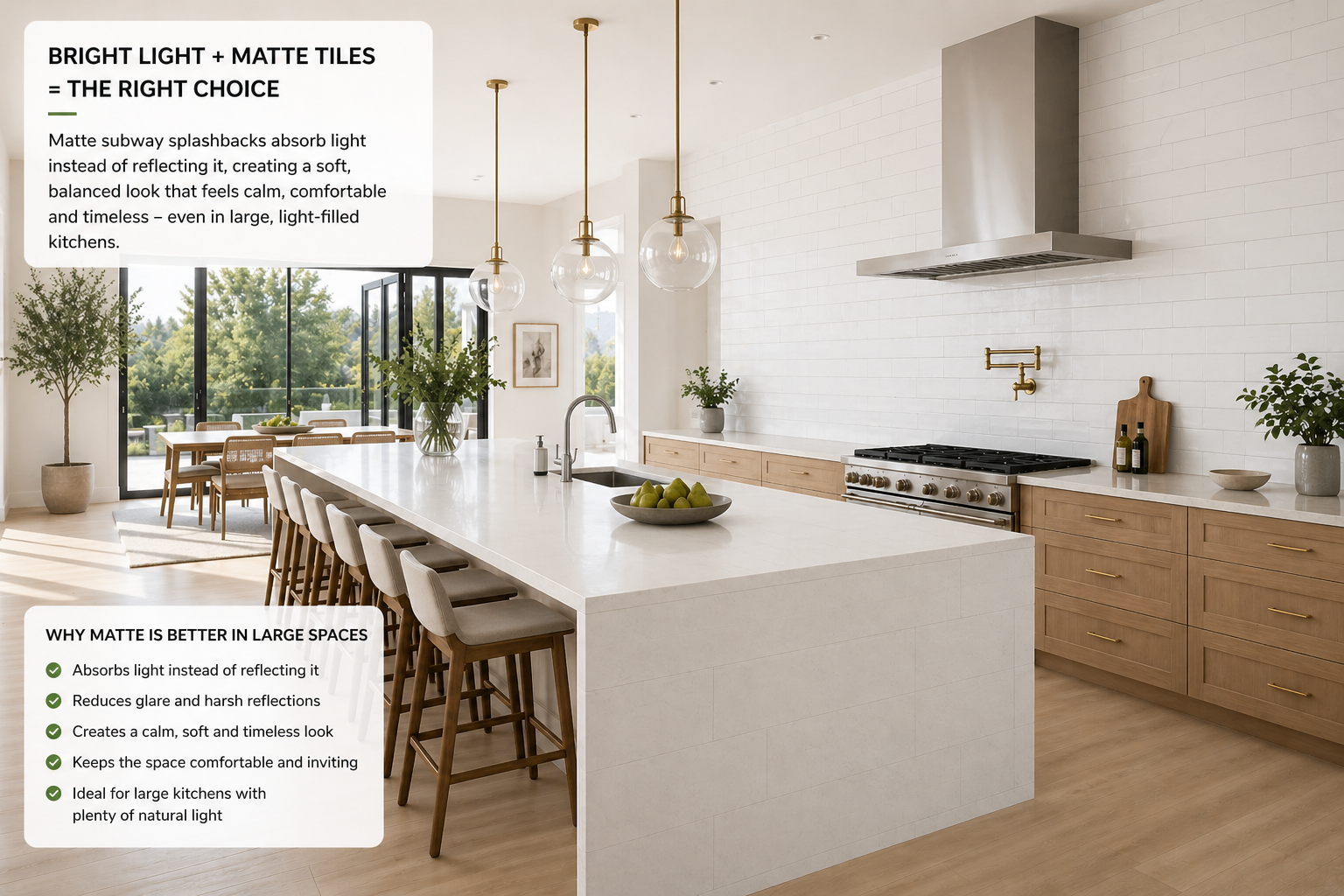
Classic rectangular subway tiles work well in traditional, modern and minimalist kitchens. White subway tiles create a bright, clean appearance, while coloured grout or darker tiles can add contrast.
Large-format tiles
Large-format splashback tiles create a streamlined look with fewer grout joints. This can make cleaning easier and produce a more continuous visual finish.
Patterned tiles
Patterned tiles introduce character and can create a focal point behind a kitchen island or cooktop. They work particularly well when the cabinetry and benchtops have relatively simple finishes.
Textured and handmade-look tiles
Textured tiles add depth and visual interest. They are ideal for homeowners who want a kitchen that feels distinctive without relying on bold colours.
When selecting splashback tiles, consider grease, food splashes, cleaning products and proximity to cooking appliances. Ensure the chosen material and installation method are suitable for the intended location.
3. Match Your Tiles With Kitchen Cabinets and Benchtops
One of the most important decisions during a kitchen renovation is choosing tiles that complement the existing or planned cabinetry and benchtops.
A coordinated colour palette helps create a kitchen that feels balanced rather than visually crowded.Before making a final decision, compare physical tile samples with your cabinet doors, benchtop samples and kitchen lighting. Colours can appear different under natural daylight and artificial lighting.
4. Choose the Right Tile Size and Layout
Tile size can significantly influence how spacious, modern and cohesive your kitchen feels.
- Large-format tiles: Create a clean, open appearance and reduce the number of grout joints.
- Medium-sized tiles: Offer flexibility for kitchens with different dimensions and layouts.
- Small-format tiles: Work well for decorative splashbacks, intricate patterns and feature walls.
- Rectangular tiles: Can be installed in horizontal, vertical, stacked or offset layouts to change the visual character of a space.
For smaller kitchens, larger tiles in light neutral colours can help create a sense of continuity. However, the final result also depends on room dimensions, lighting, grout colour and tile placement.
Discuss tile dimensions and layout with your installer before purchasing. This helps minimise unnecessary cuts, reduce material waste and achieve a more balanced finish around cabinets, doorways and appliances.
5. Understand Tile Finishes, Grout and Slip Resistance
A tile’s finish affects its appearance, cleaning requirements and suitability for different areas.
| Tile feature | What to consider |
|---|---|
| Matte finish | Often provides a softer appearance and can help disguise minor marks. Actual slip performance varies by product. |
| Polished finish | Creates a reflective, premium appearance but may show smudges and can be slippery when wet. |
| Textured finish | Adds tactile interest and may provide greater grip, depending on its tested rating. |
| Grout colour | Matching grout creates a seamless look, while contrasting grout highlights the tile pattern. |
| Grout joints | Appropriate joint width and grout selection support a durable, professional installation. |
For kitchen flooring, check the manufacturer’s slip-resistance information and select a product suitable for the expected conditions. A tile’s appearance alone does not indicate how safe it will be when wet.
For splashbacks, consider stain resistance and how easily the surface can be wiped clean. Using suitable grout and sealants, where required, also helps maintain the finished installation.
6. Explore the Latest Kitchen Renovation Tile Trends
If you are looking for inspiration, several design directions can help you create a kitchen that feels current without sacrificing practicality.Warm neutral tiles
Cream, beige, sand and warm grey tiles create a relaxed, welcoming atmosphere. These colours pair well with timber, brushed metal and natural stone finishes.
Marble-look porcelain tiles
Marble-inspired designs introduce veining and visual sophistication without requiring natural marble. Porcelain options can be easier to maintain, depending on the product.
Natural textures
Stone-look and concrete-look tiles bring depth and subtle variation to modern kitchens. They can complement minimalist cabinetry and understated colour schemes.
Statement splashbacks
Green, blue, terracotta and other muted colours can add personality to an otherwise neutral kitchen. Decorative layouts and contrasting grout can make the splashback a standout feature.
Continuous flooring
Using the same flooring across the kitchen and adjoining living areas can help create a more connected open-plan interior, provided the selected tile is appropriate for all intended spaces.
The best trend is one that suits your home’s architecture, your personal preferences and how you use your kitchen every day.
7. How Much Do Kitchen Renovation Tiles Cost?
The total cost of tiles for a kitchen renovation depends on several factors, including the material, tile size, finish, installation complexity and the area being covered.
Your overall budget should account for more than the price per square metre.
Consider these potential costs:
- Tile supply, calculated according to the area being tiled.
- Additional tiles for cutting, breakage and future repairs.
- Surface preparation and removal of existing tiles, where required.
- Tile adhesive, grout, trims and other installation materials.
- Professional installation and any necessary waterproofing or substrate work.
- Special patterns, intricate cuts and complex layouts.
For example, a large-format porcelain tile may cost more per square metre than a basic ceramic tile, but the best option depends on the total project requirements rather than the tile price alone.
Budgeting tip: Measure the floor and splashback areas separately, then obtain a detailed quote that specifies materials, preparation, installation and any exclusions. Your installer can recommend an appropriate allowance for cuts and waste based on the selected tile and layout.
At Tiles Etc, exploring different tile styles and finishes can help you find options that align with your kitchen design and renovation budget.
8. Common Mistakes to Avoid When Choosing Kitchen Tiles
Even attractive tiles can disappoint if they are not suitable for the space or installed correctly. Avoid these common kitchen renovation mistakes:
- Choosing tiles based on appearance alone. Check durability, slip resistance, cleaning requirements and intended use.
- Ignoring grout maintenance. Consider grout colour and product specifications before finalising the design.
- Using too many competing patterns. Coordinate floor tiles, splashbacks, cabinets and benchtops to create a balanced result.
- Underestimating the required quantity. Allow for cuts, breakage and the layout of the room.
- Overlooking lighting. Review samples under the lighting conditions in your actual kitchen.
- Choosing unsuitable tile finishes. Ensure the selected finish meets the practical requirements of each surface.
- Skipping installation planning. Confirm tile placement, edge trims, transitions and alignment before work begins.
Planning these details before purchasing materials can help reduce avoidable costs and deliver a more consistent finish.
9. A Step-by-Step Kitchen Renovation Tile Checklist
Use this checklist to make your tile selection process easier.
Kitchen tile planning checklist
0 of 8Measure the kitchen floor and splashback areasSet a tile supply and installation budgetChoose a suitable tile material and finishCoordinate tiles with cabinets and benchtopsCheck slip ratings and technical specificationsConfirm grout colour, joint width and layoutCalculate quantities and allow for cutting wasteArrange professional installation and final inspection
Why Choose Tiles Etc for Your Kitchen Renovation?
Choosing the right tile supplier is an important step towards creating a kitchen that combines style and practicality. From modern porcelain flooring to decorative ceramic splashbacks, finding the right product starts with understanding your design goals, budget and day-to-day requirements.
Tiles Etc helps homeowners explore tile options for different renovation styles, whether the goal is a contemporary kitchen, a warm and natural interior or a timeless design that will remain appealing for years.
When comparing tiles, consider the material, dimensions, finish, maintenance requirements and suitability for the intended application. Taking time to assess these factors can help you make a confident decision for your home.
Planning a kitchen renovation? Explore the tile options available at Tiles Etc and find styles that complement your kitchen design. Visit Tiles Etc to start planning your next renovation project.Final Thoughts
A well-planned kitchen renovation starts with selecting tiles that suit your lifestyle, complement your interior design and perform well under everyday conditions. From durable porcelain flooring to eye-catching splashback designs, the right tiles can make a meaningful difference to your kitchen’s appearance and functionality.
By considering tile materials, colours, finishes, sizes, slip resistance, grout and installation costs, you can make informed choices and avoid common renovation mistakes.
Whether you prefer warm neutrals, contemporary stone-look tiles or a bold splashback, Tiles Etc can help you explore options for your next kitchen renovation.
Leave a Reply