

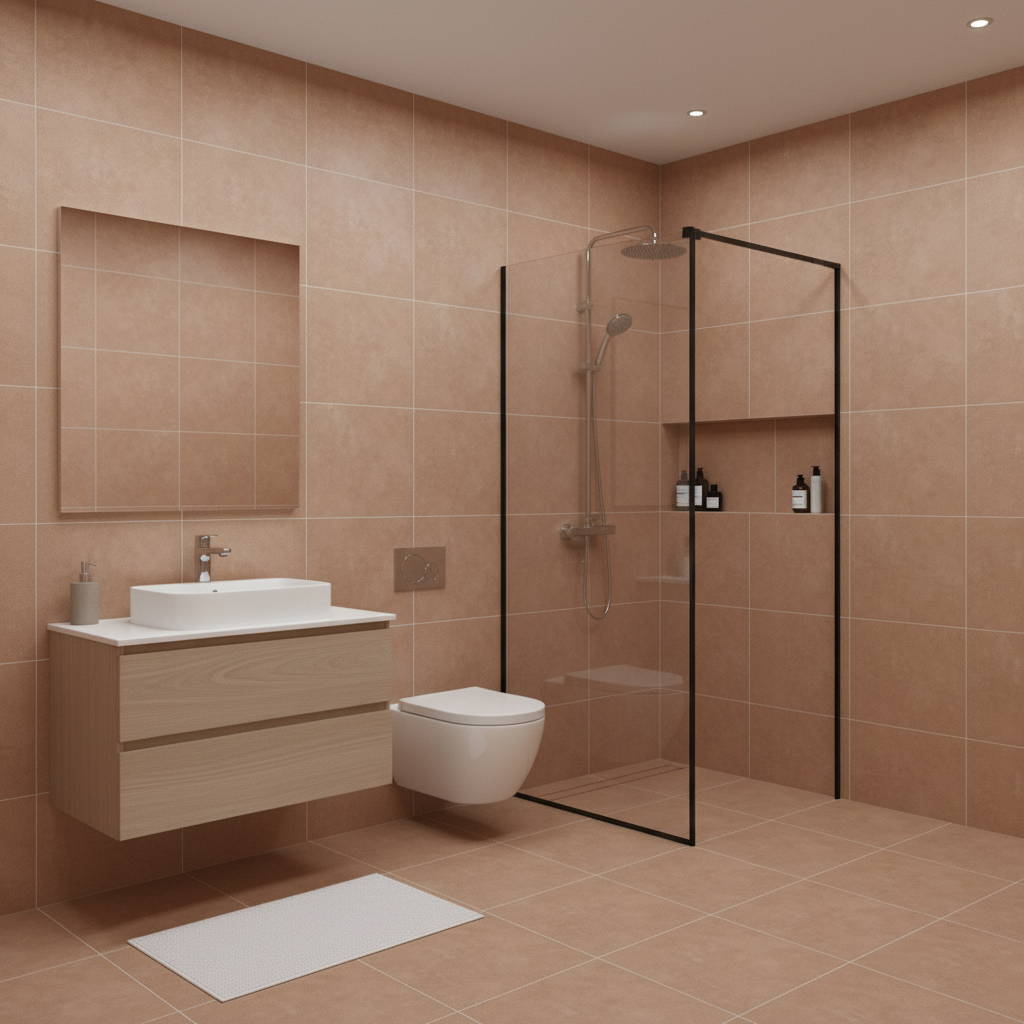

Even the smallest bathroom can feel welcoming with the right tiles. Timber-look designs bring the warmth of natural wood into the space, while still giving you the durability and easy care of a tile surface.
For most bathroom floors, porcelain timber-look tiles are a strong option to consider because porcelain is dense, durable and has low water absorption. The right choice still depends on where the tile will be installed, its technical specifications and whether it is suitable for the intended wet-area application. (Tiles Etc AU)
If you’re choosing wood-look bathroom tiles for a small bathroom, focus on four things: tile material, size, colour, finish and how the tiles work with the rest of the room.
Why Choose Timber-Look Tiles for a Small Bathroom?
Timber-look tiles can create the warmth of timber without using natural timber as the bathroom floor finish.
Today’s timber-look tiles capture the colours and grain of real wood so convincingly that they add instant character, yet they’re far easier to live with in a wet area.
This makes them worth considering if you want a bathroom that feels:
- Warm and inviting
- Natural rather than overly clinical
- Contemporary
- Easy to coordinate with neutral colours
- Consistent with timber features elsewhere in the home
Tiles Etc already highlights wood-look tiles as a practical alternative to timber, particularly where moisture and everyday maintenance are considerations.
For a small bathroom, this natural appearance can also help soften the room and prevent a compact space from feeling too stark.
Are Wood-Look Tiles Suitable for Bathrooms?
Yes, wood-look tiles can be suitable for bathroom applications, provided the particular product is rated and specified for the intended use.
For bathroom floors, porcelain timber-look tiles can be particularly attractive because porcelain is known for its durability and low water absorption. Tiles Etc’s existing bathroom guidance also recommends considering factors such as slip resistance, surface texture, tile size and cleaning requirements when choosing bathroom flooring. (Tiles Etc AU)
However, don’t choose a tile simply because it looks like timber.
Before purchasing, check:
- Whether the tile is suitable for floors or walls
- Whether it is suitable for wet areas
- Slip-resistance requirements for the intended application
- The manufacturer’s technical specifications
- Recommended installation method
- Cleaning and maintenance requirements
A wall tile and a floor tile do not necessarily have the same performance characteristics, so always check the product specifications before installation.
Porcelain vs Ceramic Wood-Look Tiles for a Bathroom
One of the first decisions is whether to choose porcelain or ceramic.
Both can offer timber-inspired designs, but they are not identical.
Porcelain wood-look tiles
Porcelain is made from refined clay and fired at high temperatures, producing a dense tile with low water absorption.
It can be a strong option for:
- Bathroom floors
- High-use areas
- Wet-area applications where the product is appropriately rated
- Homeowners wanting a durable, low-maintenance surface
Tiles Etc’s existing guidance identifies porcelain as a durable, moisture-resistant option for bathrooms and other demanding areas.
Ceramic wood-look tiles
Ceramic tiles can also provide attractive timber-inspired designs and are commonly used for wall applications and decorative areas.
However, suitability depends on the specific product.
When it comes to bathroom floors, looks and price aren’t the whole story. What matters most is whether the tile is rated for wet areas and everyday use — that’s where porcelain often has the edge.
What Colour Timber-Look Tiles Are Best for a Small Bathroom?
Colour can make a significant difference in a compact bathroom.
If your goal is to make the space feel open and relaxed, consider lighter timber-inspired colours such as:
- Light oak
- Natural timber
- Soft beige
- Warm tan
- Pale brown
- Natural neutral tones
Light timber tones
Light wood-look tiles can help create a bright, warm appearance and work particularly well with:
- White bathroom walls
- Cream tiles
- Light stone-look tiles
- White cabinetry
- Natural timber vanities
- Brushed metal fixtures
Medium timber tones
Medium wood tones can create more contrast while still maintaining a natural appearance.
They work well if your bathroom has:
- White walls
- Neutral cabinetry
- Black tapware
- Warm lighting
- Minimal decorative elements
Dark timber tones
Dark timber tones can look striking and sophisticated, but in a compact bathroom they need careful balance so the space doesn’t feel closed in.
If the room has limited natural light, too much dark flooring combined with dark walls can make the space feel visually smaller.
A good approach is to use darker timber-look flooring with lighter walls and cabinetry.
What Size Wood-Look Tiles Work Best in a Small Bathroom?
Tile size deserves careful consideration.
There is no single tile size that is automatically best for every small bathroom. The layout, room dimensions, drainage, grout lines and installation conditions all matter.
However, larger-format tiles can sometimes help create a cleaner visual appearance because they introduce fewer grout lines. Tiles Etc makes a similar point in its bathroom guidance when discussing larger tiles for smaller spaces.
For timber-look tiles, you can also consider the proportions of the room.
Long plank-style tiles
Long timber-look tiles can emphasise the direction in which they are laid.
For example, laying them along the length of a narrow bathroom can reinforce the room’s existing proportions.
Smaller timber-look tiles
Smaller formats can provide more flexibility around:
- Floor drains
- Corners
- Niches
- Irregular layouts
Your tiler can advise on the most practical format for your particular bathroom.
Should You Use Wood-Look Tiles on the Floor or Walls?
Wood-look tiles don’t have to be limited to bathroom floors.
They can also be used selectively on walls or feature areas, depending on the product.
For example, you could create:
Option 1: Timber-look floor + plain walls
This is one of the simplest approaches.
Use:
Timber-look floor tiles + warm white wall tiles
The timber effect becomes the main source of warmth while the lighter walls keep the bathroom visually open.
Option 2: Timber-look feature wall
A timber-look feature wall can create a focal point behind:
- The vanity
- Bath
- Shower area, where the product is suitable
Keep the remaining surfaces relatively simple to avoid making the room feel visually busy.
Option 3: Timber-look floor + stone-look walls
This can create a natural, contemporary combination.
For example:
Warm timber-look floor + light stone-look wall tiles
Tiles Etc already recommends combining natural-inspired surfaces such as stone-look and timber-look tiles to create warm, balanced bathroom designs. (Tiles Etc AU)
How to Make a Small Bathroom Look Bigger With Wood-Look Tiles
The tile itself isn’t the only factor affecting how large a bathroom feels.
The overall combination of colour, format, grout, lighting and layout matters.
1. Keep the colour palette simple
Too many competing colours can make a small bathroom feel busy.
Try combining:
One timber tone + one main wall colour + one accent colour.
2. Use lighter walls
If your floor has a medium or darker timber effect, lighter walls can provide contrast and help maintain a brighter appearance.
3. Avoid too many patterns
Timber-look tiles already contain visual variation.
Pairing them with highly patterned wall tiles can create too much visual activity.
4. Consider grout colour
Grout can significantly change the finished appearance.
A grout colour close to the tile can create a more continuous appearance, while contrasting grout makes individual tiles more noticeable.
5. Coordinate with the vanity
A timber-look floor does not necessarily need to match the vanity exactly.
In fact, using slightly different timber tones can create a more layered appearance, provided the undertones work together.
Are Wood-Look Tiles Waterproof?
Do You Need Waterproofing Under Wood-Look Bathroom Tiles?
This is an important distinction.
Even the most water-resistant tile isn’t a substitute for proper waterproofing. The tile is the surface finish, while the construction underneath still needs to be appropriately waterproofed for the bathroom application.
So, when choosing wood-look bathroom tiles, don’t assume that the tile itself provides complete protection against water.
Whether waterproofing is required and how it should be installed depends on factors such as:
- The bathroom design
- The substrate
- Whether the area is a shower or another wet area
- Floor and wall construction
- Drainage
- The installation system
- The applicable requirements for the project
The waterproofing membrane forms part of the wet-area construction and is separate from choosing a suitable bathroom tile.
If you’re renovating or building a bathroom, have the waterproofing and tile installation completed appropriately by a qualified professional.
In short: choose a tile that’s suitable for the intended bathroom application, but don’t rely on the tile itself as the waterproofing system.
What Should You Look for When Buying Timber-Look Bathroom Tiles?
Before purchasing, use this checklist.
1. Confirm the application
Is the tile suitable for:
- Bathroom floors?
- Bathroom walls?
- Shower areas?
- Wet areas?
Don’t assume a product is suitable simply because it is marketed as a bathroom tile.
2. Check slip resistance
For bathroom floors, slip resistance is an important consideration.
Ask the supplier about the product’s technical specifications and suitability for the intended area.
3. Compare finishes
Matte and textured finishes are often considered for bathroom floors, while the best choice depends on the specific tile and application. Tiles Etc’s bathroom guidance recommends considering slip resistance, surface texture and maintenance when choosing bathroom flooring. (Tiles Etc AU)
4. Look at samples
A tile can look completely different depending on:
- Natural light
- Artificial lighting
- Wall colour
- Vanity colour
- Grout colour
If possible, view a physical sample before making your final decision.
5. Consider the whole bathroom
Don’t select the floor tile in isolation.
Look at it alongside:
- Vanity
- Benchtop
- Wall tiles
- Tapware
- Shower screen
- Lighting
- Paint colours
This will help you create a cohesive result.
Timber-Look Bathroom Tile Ideas for Small Bathrooms
If you need inspiration, here are a few combinations to consider.
Warm and Minimal
Light timber-look floor + warm white walls + timber vanity
A simple combination for a calm, natural bathroom.
Modern Contrast
Medium timber-look floor + white walls + black tapware
The darker fixtures create contrast without requiring heavily patterned tiles.
Natural Spa Style
Light timber-look tiles + stone-look walls + warm lighting
This combination can create a relaxed, nature-inspired bathroom.
Contemporary Neutral
Grey-brown timber-look floor + large-format beige wall tiles + brushed metal fixtures
A good option if you prefer a modern neutral palette.
Feature Wall
Simple neutral floor + timber-look feature wall + understated surrounding tiles
This gives the timber effect more prominence without covering every surface in the same pattern.
Frequently Asked Questions
Are timber-look tiles good for bathrooms?
Yes, timber-look tiles can be suitable for bathrooms when the specific product is rated for the intended application. Porcelain timber-look tiles are particularly worth considering for bathroom floors because porcelain has low water absorption and good durability.
Are wood-look bathroom tiles waterproof?
The tile itself can have low water absorption, particularly in porcelain, but the tile does not replace the bathroom waterproofing system. Wet areas must meet the applicable waterproofing requirements.
What are the best wood-look tiles for a small bathroom?
For a small bathroom, consider a timber-look tile in a light or medium natural tone, with a finish and technical specification suitable for the intended application. The best size depends on the room layout and installation requirements.
Are porcelain or ceramic tiles better for bathroom floors?
Either may be suitable depending on the specific product, but porcelain is often preferred for demanding floor applications because of its density, durability and low water absorption. Always check the manufacturer’s specifications for the intended use. (Tiles Etc AU)
Do wood-look tiles make a small bathroom look smaller?
Not necessarily. Light or medium timber tones combined with lighter walls can create a warm, balanced appearance. Tile size, grout colour, lighting and the overall colour palette also influence how spacious the bathroom feels.
Do I need waterproofing under bathroom tiles?
Bathroom waterproofing requirements depend on the wet-area design and construction. The tile is the finished surface and should not be treated as the waterproofing system.
Final Thoughts
Timber-look tiles are one of the easiest ways to bring warmth and natural character into a small bathroom, without the headaches of real timber in a wet space.
For the best result, don’t choose purely on appearance.
Look for a tile that is:
- Suitable for the intended bathroom application
- Appropriate for the floor or wall
- Suitable for wet-area conditions
- Appropriate for the required slip resistance
- Easy to maintain
- Compatible with your bathroom’s colour palette and layout
For many Australian bathrooms, porcelain timber-look tiles are a practical option worth considering, particularly when durability and moisture performance are important.
If you’re planning a bathroom renovation in Perth, compare different timber-look colours, sizes, finishes and complementary wall tiles before making your final selection.
Explore bathroom tile options at Tiles Etc and speak with the team about choosing tiles suitable for your project.
Leave a Reply